Develop yourself

Develop yourself. Velper helps you find your best self.

Financial Freedom

Gain Financial Freedom and never work for anyone again.

Achieve your goals

Achieve goals that you never imagined possible with our free articles.

Health and Fitness

Lose Weight and Feel more confident with our advice.

Motivation

Learn how to stay inspired and motivated everyday

Welcome

Welcome to Velper Self Improvment. This is a place where you will be able to develop yourself. Feel free to browse and look at the articles.
Showing posts with label health. Show all posts

Tuesday, 18 December 2012

The 10 Commandments For 2013! 10 Tips to Make the New Year a Success

The 10 Commandments For 2013! 10 Tips To Make The New Year A Success!

Whether you are someone making health and fitness a New Year's Resolution for the first time, or tried and failed for years, this year is going to be different. This year will be your year.
Whether you are someone who is making  health and fitness a New Year Resolution for the first time or you have tried and failed for years, 2011 is going to be different for you. This year will be your year. If you have any doubts about that, then erase them now because success is your 2011 destiny.
To ensure success you can follow these 11 Commandments to avoid making the mistakes that cause failure and to stay motivated not only this year but for years to come.

This year will be your year for change and these 11 Commandments can help.

Commandment 1: Make A Decision, Not A Resolution

The reason most people fail is because New Year Resolutions are something that is done every year and is normally laughed at because they joke about how they will forget by February. Therefore in the mind resolution equals failure. This year do not make New Year Resolutions. Make decisions in 2011. Decisions are final. Decisions are acted upon. Acting on those decisions is what will help you succeed.

Commandment 2: Make Long Term And Short Term Goals

If you set one goal for the long term then it seems so far away that you will give up before reaching it. I do suggest long term goals but I also suggest setting short term goals that will serve as steps you can climb to help you reach that mountaintop you have set for yourself. Focusing on the short term goals will make the road easier for you to travel and will give you more confidence as you reach those targets. Here is an example. Your long term goal is to lose 20 pounds in 12 weeks. Make short term goals of losing 5 pounds every three weeks.

Commandment 3: Write Everything Down

Having the goals in your mind is not enough. Those of you that have tried and failed in the past know that this is true. You need to see it to keep it fresh in your mind and to remind you of what you want to do. You should get a notebook and write down your goals, your motivation, and anything else that will keep you going when the times get tough so you won't stop working. There are many successful people from athletes to CEO's and all other walks of life that do this. You should too.
Even something as simple as writing down your goals can better your chances for success.

Commandment 4: Take Before Photos

Mentally this is a big step but it is a step you need to take. To get where you want to go you must understand where you are leaving from. This is true when it comes to fitness. You see that photo and you know exactly what you want to change. Take both front and back photos and post them on your BodySpace.
Although this is tough for many people to do it should serve as motivation for you. Imagine how far you are going to travel and how different the after photos will look when you take them 12 weeks from now. Imagine how impressive the transformation will look when the before and after pics are side by side.

Commandment 5: Find Inspirational People And Follow Them

There are many people out there who are successful, and there are going to be many that inspire you. Some will be more impressive than others and having role models are a great source of motivation. If they can do it so can you. So find 10 people that really stand out to you and label them as one of the people who inspire and motivate you. Seeing these beacons of success will drive you when times get tough and you think about stopping. They won't let you and you will be glad they didn't. Who knows? Maybe in 2013 someone will label you as someone who inspires them.

Commandment 6: Make A Plan And Follow It

There are thousands of articles on Bodybuilding.com that will help you come up with your own strategy to reach your goals. There are all kinds of training plans from FST-7 to Dramatic Transformation Principle and many others. There are all types of nutrition articles to help you choose the right foods and help you avoid making mistakes. Supplements can be confusing but we got you covered there too. Browse around the SuperSite and get the bodybuilding education you need to earn a PhD in fitness. Once you get that plan stick to it because consistency is a key to progress.

Commandment 7: Track The Workouts And Progress

Nothing beats seeing your progress to keep you inspired to work harder.  You can use the Workout Tracker to post each workout to remind you what you want to improve on next week. You can also update your lifting stats and body stats and see progress in a chart. Seeing the lines move in the right direction will boost that confidence off the charts.

Commandment 8: Enjoy The Journey

Look. This is more than going to the gym to lose a few pounds and increasing your bench press. You are changing your life. You are doing something that many people either can't or won't do. This isn't to be taken lightly. Take the time to enjoy the journey and appreciate what you are doing. This will make the destination that much greater when you get there.

Commandment 9: Celebrate Any And All Progress

I am going to use a football analogy here. The 12 week goal is the UEFA Champions League.  Your first 3 Week goal is getting in the playoffs. Your next 3 Week goal is winning your group stages. At the 9 Week mark you find out you are going to the "Big Game". Finally you win it all. The point is in order to reach your ultimate goal you must accomplish the smaller goals first. So when you reach those smaller targets celebrate those too. Once again this helps you stay motivated and working hard for the big one.
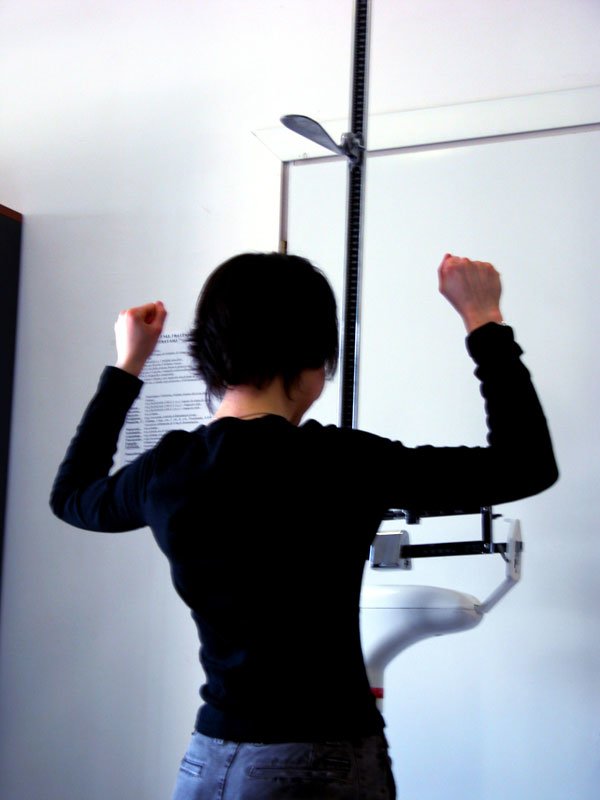
Small victories are still victories. Make sure you celebrate your successes.

Commandment 10: Do Not Quit!

I don't care what adversity you run into or what obstacles stand in your way. You keep going and let nothing stop you. If there is a hurdle you jump over it. If there is a wall go around it or smash right through it. Each step forward is progress.
You don't stop and you don't back up for anything. This will be your year and having the determination to finish what you started is why 2011 is going to be a year you remember for the rest of your life. Make sure you keep your BodySpace updated so you can have that motivation right at the click of a mouse when times get tough. Look to those that inspire you for that source of mental energy you need to get up and go. Let nothing stop you on your path to being a champion and a New Year Success Story!

Conclusion

Print these 11 tips if you like and keep it somewhere you will easily be able to look at it so you can remind yourself of each of these commandments. All 11 of these tips will go a long way in helping you do what you want to do in 2011. Have a healthy and happy new year!

Saturday, 8 December 2012

How to Lose Weight

The healthiest way to lose weight is neither crash diets nor bursts of exercise. The body likes slow changes in terms of food and exercise.
For example, someone who hasn't exercised for years shouldn't rush into running miles a day or pounding the treadmill. Not only will the struggle to do so leave you feeling disheartened and demotivated, you're also far more likely to injure yourself and set your fitness levels back further.
The same goes for people who suddenly start starving themselves. Diets that severely restrict calories or the types of food 'allowed' can lead you to be deficient in the nutrients and vitamins that your body needs.
So, if you need to lose weight, what should you do?

Energy needs and weight loss

Your body uses food for energy. It stores any excess energy as fat. This means if you eat more food than your body needs for daily activities and cell maintenance, you'll gain weight.
To lose weight, you need to get your body to use up these stores of fat. The most effective way to do this is to:
  • reduce the amount of calories you eat
  • increase your levels of activity.
This is why experts talk about weight loss in terms of diet and exercise.

Introduce changes gradually

Small changes can make a big difference. One extra biscuit a week can lead you to gain 5lb a year – cut that biscuit out of your diet and you'll lose the same amount.
You're also more likely to stick to, say, swapping full-fat milk for semi-skimmed or making time for breakfast each morning than a diet that sets rules for all foods.
You should think of weight loss in terms of permanently changing your eating habits. While weight-loss goals are usually set in term of weeks, the end game is to sustain these changes over months and years, ie lifestyle change for life.

Increase your activity levels

Someone who increases the amount they exercise, but maintains the same diet and calorie intake, will almost certainly lose weight.
No matter if you hate gyms – even light exercise, such as a short 20 minute walk, will be beneficial if done most days of the week.
Every single time you exercise more than usual, you burn calories and fat.
There are lots of ways to increase the amount of activity you do. Team sports, racket sports, aerobics classes, running, walking, swimming and cycling will all improve your fitness levels.
Find something you enjoy that's easy for you to do in terms of location and cost. You're then more likely to build it into your routine and continue to exercise, despite inevitably missing the odd session through holidays, family commitments, etc.
  • Get out and about at the weekend. Leave your car on the drive and walk to the shops. Try to incorporate longer walks into outings to the park, coast or countryside and take a picnic, so you're in control of what you are going to eat that day.
  • Every extra step you take helps. Always use the stairs instead of the lift, or get off the bus a stop before the usual one and walk the rest of the way.
  • Use commercial breaks between TV-programmes to stand up and do exercise, or consider using an exercise bicycle in the living room while watching your favourite programme.

Reduce your calorie intake

What is overweight?

Doctors use BMI to assess weight.
A BMI of 18.5 to 25 is healthy.
If you have a BMI of more than 25, you're overweight.
Over 30 is obese.
Over 40 is morbidly obese.
To calculate your BMI, you'll need to know your weight in kilos and your height in metres, then follow the example below.
1. Multiply your height by itself, eg 1.7x1.7= 2.89.
2. Divide your weight (eg 80kg) by this figure.
3. 80 ÷ 2.89= 27.7.
27.7 is the BMI.
If you're overweight, you can't continue with your current eating habits if you really want to lose weight.
It's not possible to reduce body fat while eating lots of food, cakes and sweets. This doesn't mean you can never have any treats, but you need to learn how to limit these foods to small quantities – say, for special occasions.
In terms of weight-loss, you can get your body to use up existing stores of fat by eating less and making healthier choices.
This doesn't mean crash diet (anything less than 1500 calories), which usually ends up with you either getting weaker or giving up in desperation. Quick-fix diets can lead to a yo-yoing effect of drastic weight loss followed by weight gain, resulting in a vicious cycle.
There are no shortcuts to losing weight in a healthy and reasonable way.
Eating 300 to 500 calories less per day should lead to a loss of between one and two pounds per week. This is a realistic target. It may seem slow, but it would add up to a weight loss of more than three stone in a year.
Fat contains the most amount of calories out of all the food types (protein, carbohydrates), so a good way to achieve this is to cut down on fatty foods and eat more wholegrain bread, fruit and vegetables.
Below are ways to reduce calorie intake without having to alter your diet significantly.
  • Replace fizzy drinks and fruit cordials with water.
  • Swap whole milk for semi-skimmed, or semi-skimmed for skimmed.
  • Eat less lunch than usual. For example, make your own sandwich and limit the use of margarine or butter and full-fat mayonnaise (store-bought sandwiches often contain both).
  • Stop taking sugar in tea and coffee.
  • Have smaller portions of the food you enjoy.
  • Avoid having a second helping at dinner.
  • Cut out unhealthy treats – such as confectionary, sugary biscuits and crisps between meals.
  • Cut down on alcohol intake.
All these things will influence your health in a positive way.
Finally, don't be tempted to skip breakfast – or any meal to lose weight. While skipping a meal will reduce your calorie intake for that hour, it will leave you much hungrier later on.
Not only are you likely to overeat to compensate, but you'll often make bad choices to fill the gap: a cereal bar is not as healthy as a bowl of cereal or as filling, leading you to 'need' something extra for lunch.
Irregular eating habits also disrupt your body's metabolism, which makes it harder to lose weight in the first place.

Write down your plan

Food diary

If you're not sure what's wrong with your diet, try keeping a daily diary of everything you eat and drink.
You can use a notebook or an online diary.
At the end of the week, review your entries for problem areas.
Look out for processed foods, alcohol, fast food, roasts, creamy sauces and fried foods.
If your diet seems largely healthy, look at portion sizes.
If you're not sure what's meant by 'healthy diet', read our series on nutrition.
Once you've decided on what changes you're going to make, write them down. For example:

Week 1

  • Exercise: one 20 minute walk every lunch hour.
  • Alcohol: none in the week, two small glasses of wine on Friday, Saturday, Sunday.
  • Food: no chocolate or biscuits in the week, choose healthy snacks such as fruit, trim all fat from meat, eat no fried or fast food.
  • For each week list your targets concerning alcohol, exercise and your food plan.
  • Each day should then be listed in a simple chart and items you have had should be written down. It is also important to make a note of your mood and any comments you would like to get off your chest for each day.

Be patient and persevere

It might take a week or two before you notice any changes, but they will steadily appear. After the first month you'll be able to see the results and measure them in terms of looser fitting clothes.
Keeping your motivation up is one of the most difficult aspects of dieting. There will be days when healthy eating goes out the window, and there will be weeks where you may not lose any weight – or put a little back on.
This is normal for everyone – dieters or not – so don't let it undo your plans for a slimmer you. You're not doing anything 'wrong', but you may need to look at your plan. Do you need to increase your activity levels? Make a few more changes to your diet? Put more effort into sticking to your current plan?
The other side of this is to make sure you celebrate your goals. While there's joy enough in stepping on the scales and seeing them dip lower, be sure to mark long-term progress with a reward – such as new clothes or time off from domestic chores.
Celebrating is also a way to involve your nearest and dearest – it's up to you whether you want their encouragement in the form of gentle reminders not to eat certain foods. But support from other people can get you through the bumpy patches.

Health benefits of weight loss

Studies show that overweight women who lose between 10lb and 20lb halve their risk of developing diabetes. For men, the risk of heart problems reduces considerably.
Generally, we gain weight as we age. A few pounds over the years are not a problem, but people who gain more than 20lb compared to their weight as an 18-year-old will rapidly increase their risk of health problems due to that extra weight. In particular, women increase their risk of heart attack and double their risk of dying from cancer.
It may seem like these are problems to worry about in the future, but time flies by and tomorrow becomes today. By keeping your weight in the healthy range, you're less likely to be troubled by illnesses in your later years.